About CrossVoice
I love games like Mordhau and Hunt: Showdown, and I always liked the voice-line system in Mordhau, and in Chivalry 2 as well. At some point I started wondering how I could use that same mechanic in Hunt: Showdown, and why not, in any other game with voice chat.
That idea became a first prototype in Python that worked through virtual audio devices. The concept worked, but for various reasons the project sat on the shelf for several years.
Later I came across soundboards like Soundpad and what they could do by playing sounds through the microphone. But every soundboard I found worked the same way: one key, one sound. That pushed me to pick the project back up and take it much further than the original prototype. I started experimenting with C++ to build a native audio solution that gave me real control over how sound is handled and transmitted.
From there I built the rest of the application in C#, starting with an interface for managing Profiles and setting up voice commands. I soon realised that playing sounds was only part of the problem: everything also had to work with each game's voice chat, including games that use push-to-talk. That led me into audio routing and low-level keyboard handling, so those key presses could be managed reliably.
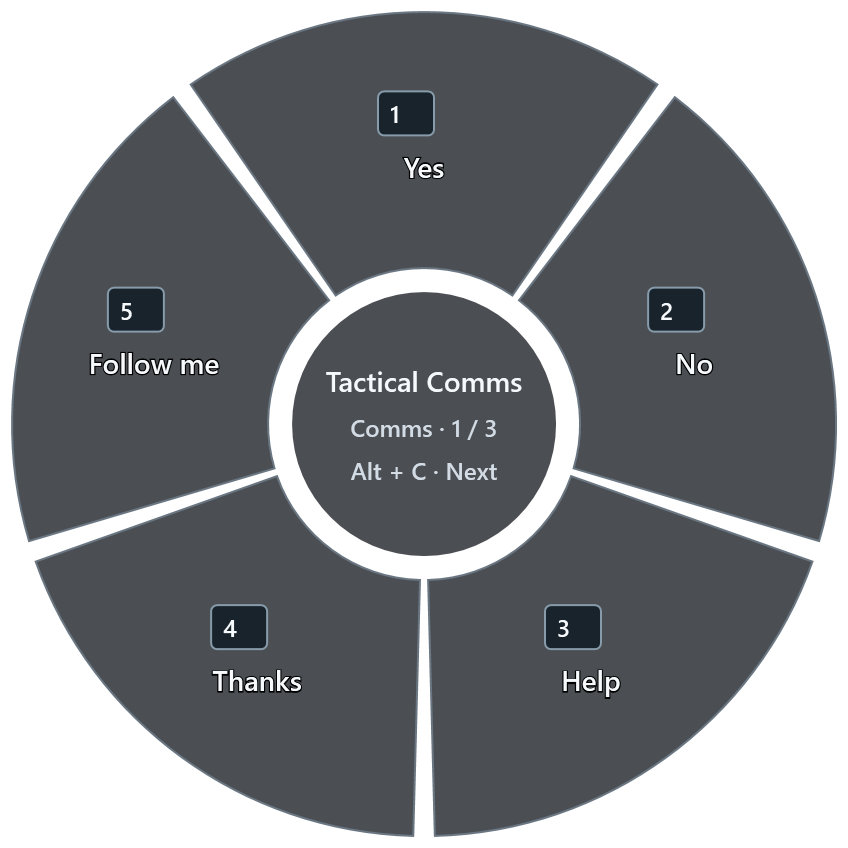
As development went on, CrossVoice grew. Profiles evolved to organise commands into Pages, with keys and modifiers, audio Variants, and settings such as volume, pitch and playback speed. I also added a persistent Overlay so you can use and control the app during a match, without leaving the game.
My goal has always been that CrossVoice doesn't depend on any particular game. You set up your Profiles your way and use them across games, without game-specific integrations and without the app needing to know what you're playing.
At that point it didn't make much sense for all that work to stay in my own Profiles. Why not let players share theirs and enjoy what the community creates? That's how the Community side of CrossVoice took shape.
That's how CrossVoice grew from a Python prototype into the project it is today. What started as an idea while playing Mordhau and Hunt: Showdown became a far more ambitious project, in which I've built and extended practically every part of the application.
— Raúl Mateo